



The lilies were wrong.
Not the color — the color was correct, white with the faintest blush at the center, the variety Edmund had planted along the south wall fourteen years ago. The problem was the stems. She’d cut them at six that morning, before the dew had lifted, and three of them had bent in the bucket. Bent lilies on a memorial table. She could hear Vivienne Ashworth’s voice already, the observation wrapped in sympathy: Oh, Constance, you must be exhausted, managing everything alone.
She cut three more. These held straight.
The garden was at its best in early September, when the roses gave their second bloom and the light had a quality that Edmund had once described as apologetic. He’d been right. The light at Harwick House in autumn seemed to be sorry about something — the dying summer, the shorter days, the way things were always ending in Greenvale.
She arranged the lilies on the kitchen counter. Twenty-six stems for twenty-six place settings. Six of those settings would have no one behind them — the memorial places, one for each family member who had drifted. Edmund’s was at the head. She set his every year with the full silver, the crystal, the linen napkin folded into the bishop’s hat that the table guide prescribed for formal occasions. She’d looked it up the first year. Now she could fold it without looking.
The kitchen was warm from the ovens. Mrs. Parr had been in since five, working the lamb, which was set on a bed of rosemary from the kitchen garden and would rest for forty minutes after cooking, which meant it needed to come out at eleven-twenty, which meant Mrs. Parr needed to be watched because Mrs. Parr had a tendency to trust her instincts over the thermometer and instincts did not produce consistent results.
“The lamb,” Constance said.
“I know, Mrs. Harwick.”
“Eleven-twenty.”
“As you said.”
Constance left the kitchen. She walked through the house — the hallway with the parquet flooring Edmund’s grandfather had imported from Vienna, the drawing room where the drinks would be served before lunch, the dining room as backup in case of rain. She checked each room the way she checked them every morning: curtains aligned, surfaces clear, the temperature at eighteen degrees. The thermostat was in the hallway, behind the portrait of Edmund’s mother, who watched the house from her frame with the expression of a woman who had found everything satisfactory and nothing interesting.
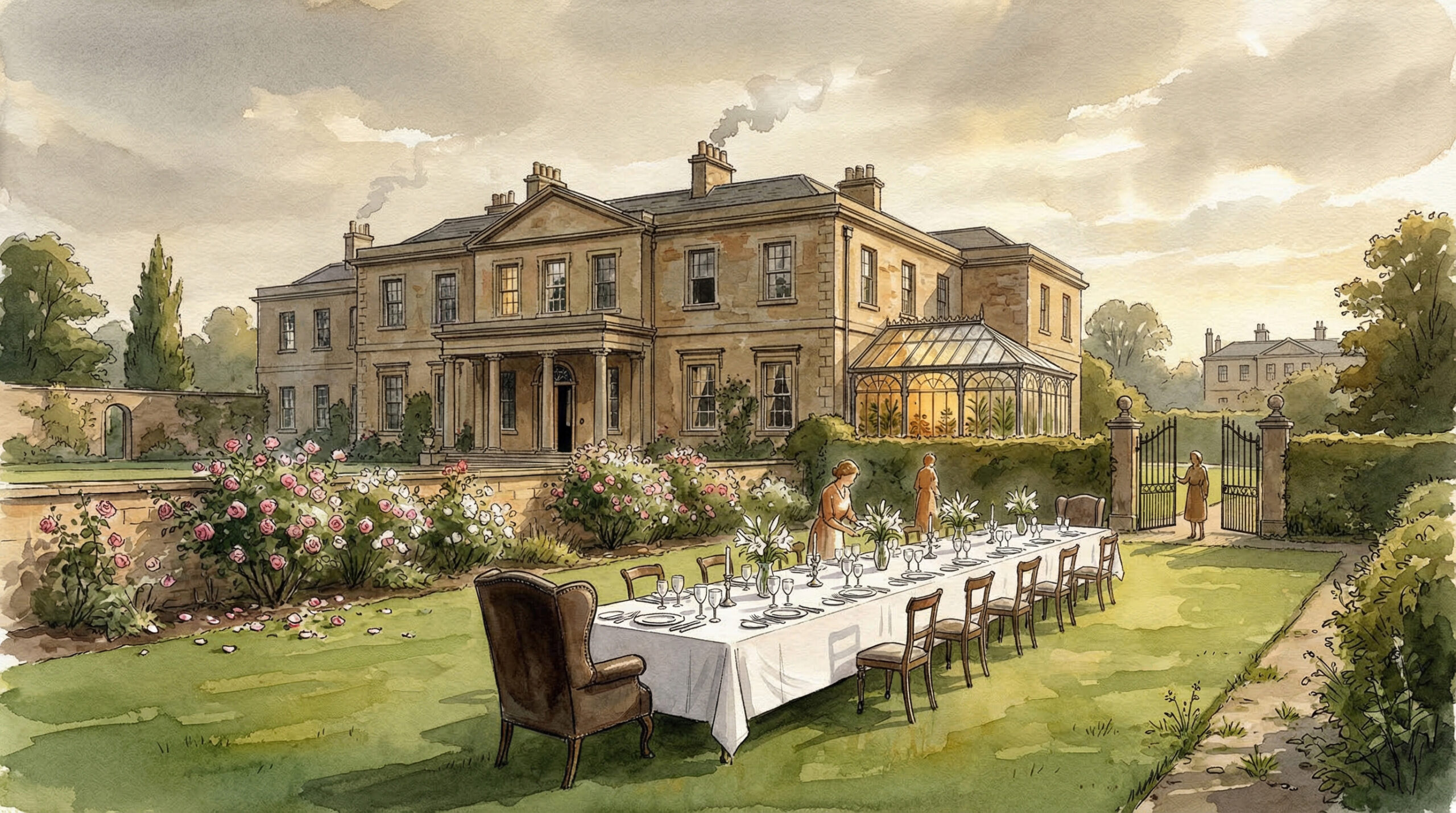
In the garden, the table was set. White linen, weighted at the corners against the breeze. The silver had been polished on Thursday. The glasses were Riedel, bought in sets of thirty in 2042 and now at twenty-seven, three having been broken over the years by guests who would never admit it and by Constance who had.
She adjusted a knife. Moved a glass a centimeter left. Stood back and looked at the table the way a painter looks at a canvas — for the thing that was wrong, the element that broke the composition.
It was perfect. She adjusted the knife back.
The memorial chairs were at the far end. Six place settings, six folded napkins, six lilies laid across each plate. No names. The families knew which seat was whose. Edmund’s was the largest chair — the one from his study, the leather wingback, carried out each year by the gardener and set at the head of the table where Edmund had sat for thirty years.
Constance looked at the chair. The leather was cracked at the armrests where his hands had worn it. She’d had it reconditioned once, three years ago, and then stopped, because the cracks were coming back and she’d realized she was paying someone to erase evidence of a life she was supposed to be memorializing.
She went inside. Changed into the gray dress she wore each year — not black, because this was not a funeral, and not colored, because this was not a party. Gray. Constance understood gray.
Julian arrived at ten-thirty, which was early. Julian was never early.
She saw his car from the upstairs window — the dark sedan turning through the gates, Claire in the passenger seat, the child’s car seat in the back empty because Rosemary was with Claire’s parents for the weekend. He parked and sat in the car for a moment before getting out. Claire got out first. Julian followed.
Constance came downstairs. She opened the front door before they knocked, which she did every year, which signaled that she’d been watching, which was a thing she did and everyone pretended she didn’t.
“Julian. Claire. You’re early.”
“Traffic was light,” Julian said. He kissed her cheek. His cologne was different — heavier than usual. His cufflinks were the silver ones Edmund had given him, which he wore to formal events, and he straightened them as he stepped back. “The garden looks beautiful.”
“Thank you. Come in.”
Claire kissed her on both cheeks, the French way. She smelled of soap and something clean. She was wearing a blue dress that Constance hadn’t seen before and that fit her well, and Constance noticed this and said nothing about it because complimenting Claire’s clothes implied that Claire’s clothes needed to be noticed, which implied they weren’t usually worth noticing.
“Can I help?” Claire said.
“Everything’s done.”
“The lilies are lovely.”
“Edmund’s variety. They come back every year.”
They went through to the drawing room. Constance poured water from the carafe — drinks would come later, with the other guests. Julian stood at the window, looking at the garden. Claire sat on the sofa and crossed her ankles the way Greenvale women were supposed to and then uncrossed them because she’d never fully learned the habit.
“The Ashworths confirmed?” Julian said, still at the window.
“Vivienne and Thomas. Eleanor is traveling.”
“The Chens?”
“Margaret Chen. Alone.”
“Alone?”
“Peter is at the Wellness Center.”
Julian turned from the window. Something passed across his face — not surprise, because the Chens’ situation was known, but a kind of recognition. He straightened his cufflinks again.
“Right,” he said.
The guests arrived between twelve and twelve-thirty. Twenty people. The Ashworths, the Chens, the Vandermeer cousins (two of four — the other two had drifted), the remaining Greenvale families who still came, still dressed, still walked up the drive and said how lovely the garden looked and how well Constance managed and how important it was to keep the tradition alive.
Constance received them at the front door. She had done this for seventeen years and she did it well. Each greeting calibrated — warmth for the lonely ones, briskness for the efficient ones, a touch on the arm for the ones who were visibly struggling. Vivienne Ashworth arrived last, in a coat that had been beautiful for twenty years, and surveyed the table with the proprietary eye of a woman who had once hosted the biggest events in Greenvale and now attended other people’s.
“The lilies are particularly fine this year,” Vivienne said.
“Edmund’s variety.”
“Yes, you’ve always managed his garden wonderfully.” The pause was microscopic. His garden. Not your garden.
Constance smiled. The smile was a tool. She’d been using it for forty years and it did exactly what she wanted it to do, which was to close a conversation without the other person noticing.
They sat. Constance at one end, the wingback chair empty at the other. The guests arranged themselves. Julian and Claire were at the middle of the table, across from each other. Claire’s hands were folded in her lap. Julian’s were on the table, his wine glass between them.
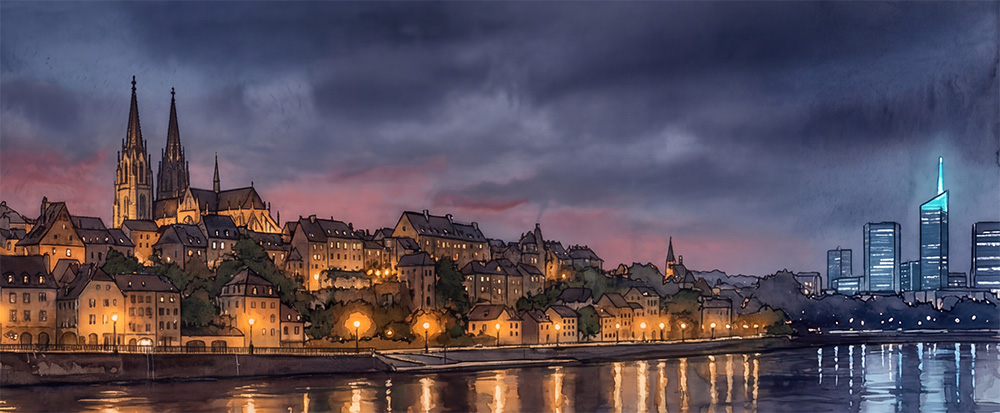
Constance stood. The garden was quiet. The city was visible below the slope of the lawn — the Meridian’s towers in the middle distance, the haze of the Warrens beyond, Old Town’s spires catching the midday light.
“Thank you for coming,” she said. “We gather each year to remember those we’ve loved and those we’ve lost. This year we add Peter Chen to our table. Margaret, we hold him with you.”
Margaret Chen, who was seventy and had been married to Peter for forty-four years, nodded. She was holding her napkin in both hands.
“We eat. We remember. We stay.”
She sat. The lunch began.
The lamb was correct. Mrs. Parr had used the thermometer. The rosemary was fragrant, the potatoes were golden, the salad was dressed with the vinaigrette Constance made herself because Mrs. Parr’s vinaigrette was too sweet. The wine was a 2058 Côtes du Rhône that Julian had sent, which was generous and which Constance had acknowledged with a note and not a phone call.
The conversation was what it always was: careful, warm, conducted across subjects that were safe and around subjects that were not. The garden. The weather. The Greenvale Club’s decision to reduce its operating hours (discreetly, because saying “we can’t afford the staff” would be undignified). A grandchild’s school. A holiday planned. Nobody mentioned the drift except in the abstract — the memorial toast had been the designated moment, and the moment had passed, and now the conversation could flow around the absence the way water flows around stones.
Constance watched. She ate. She refilled glasses and redirected conversations that drifted toward politics or money, which were the same thing. She asked Vivienne about her granddaughter’s recital and received a detailed answer. She asked Thomas Ashworth about his hip, which was better. She did not ask Margaret Chen anything beyond “More wine?” because Margaret was holding together and additional attention would undo her.
Julian was quiet. He spoke when spoken to. He complimented the wine, which was his. He asked Thomas about the hip. He did not look at the wingback chair, which Constance noticed because Julian always looked at the chair, every year, at least once, the way sons look at the places their fathers used to be.
At two o’clock, the table began to thin. The older guests left first — the Vandermeer cousins, who had a car waiting. Then the Ashworths, Vivienne pausing at the door to say the thing she always said: “Next year, Constance.” Meaning: I’ll be here. Meaning: will you?
By two-thirty, the garden held Constance, Julian, Claire, and Margaret Chen, who was sitting in her chair with her hands around her coffee cup, not drinking it.
“Margaret,” Constance said. “Shall I call you a car?”
“In a moment.” Margaret looked at the memorial chairs. “Peter used to complain about the seating. He said you always put him next to Vivienne and Vivienne only talked about her investments.”
“He was right. I did.”
“He adored you for it. He said it was the only time all year he got to be rude about the Ashworths without consequences.”
Constance laughed. It surprised her — the sound, the feel of it. She covered it quickly.
Margaret stood. She touched Constance’s arm. “Thank you,” she said. “For this. For all of it.”
She left. The car came. The gate opened and closed.
Claire began clearing plates.
“Leave them,” Constance said.
“I can help.”
“I’ll do it later.”
Claire set the plates down. She looked at Julian. Julian was sitting in his chair, looking at the garden, his fingers on the stem of his wine glass.
“I’ll be inside,” Claire said. She went.
The garden was quiet. The breeze had stopped. The city below was hazy in the afternoon light — the Meridian catching the sun, the rest of Vesper fading into the gray that was always there.
Julian reached into his jacket. He took out a folded document — two pages, cream paper, the kind that didn’t come from a printer. The kind Constance used.
He set it on the table between them.
Constance looked at it. She recognized it. She’d written it six weeks ago, at the desk in her study, in her own hand, and delivered it to the Wellness Center in person because she didn’t trust the post and she didn’t trust digital and she didn’t trust anyone at the Wellness Center except the director, who had been discreet for eight years and had now, apparently, not been.
She had not signed it. The terms were agreed, the date set, the signature line left blank. Signing it would make it real.
“Where did you get that?” she said.
“The director’s office. It was on his desk when I visited Dad last week.”
“You visited Edmund.”
“I visit him every month, Mum.”
The switch from Mother to Mum told her where they were. Private. Dangerous.
“You read it,” she said.
“Yes.”
“It was not intended for you.”
“It’s a transfer request. For my father. From the Wellness Center to Haven West.” He picked up the document. Held it. “Haven West is in Driftwood.”
“I know where Haven West is.”
“It’s a public facility. Shared rooms. Basic nutrition. The survival statistics are —”
“I know the statistics.”
Julian put the document down. He looked at her. He had Edmund’s eyes — the particular brown that went amber in direct light — and he was using them the way Edmund had used them, which was to look at her and wait for her to explain herself.
“The trust is declining,” Constance said. “The Wellness Center raised its rates in March. The consortium model depends on participation, and three families have left in two years. The math is simple.”
“The math.”
“Yes. The math.”
“You’re moving Dad to a facility where people die faster because of math.”
“I’m moving him to a facility we can afford.”
“We have money.”
“We have less money than you think.” She folded her napkin. The fold was precise. “The Wellness Center costs fourteen thousand a month. The house costs eight. The insurance, the maintenance, the staff, the garden —” She stopped herself. Took a breath. “Haven West costs three thousand. Edmund would receive adequate care. He would not know the difference.”
“He’s my father.”
“Yes. And he has been in a bed in a room for eight years and he has not opened his eyes and he has not spoken and he does not know whether the sheets are linen or cotton or whether the view from the window is the garden or a car park.”
The words came out sharper than she’d intended. She pressed her lips together. Adjusted the napkin.
Julian’s jaw tightened. He looked at the wingback chair at the end of the table. The empty place setting. The lily on the plate.
“You set his chair every year,” he said.
“Yes.”
“You put out his glass. His napkin. The lily.”
“Yes.”
“And then you go home and sign a transfer to put him in a warehouse.”
“Haven West is not a warehouse.”
“It’s not the Wellness Center.”
“No.”
They sat. The afternoon was fading. The first lights were coming on in the Meridian — the towers shifting from reflection to illumination, the transition that happened every evening and that Constance watched from this garden because Edmund had designed the lawn to frame exactly this view.
“The garden costs four hundred a month,” Constance said. “The gardener comes twice a week. He maintains what Edmund built. The hedges, the borders, the roses.” She looked at the roses along the south wall. “I could let the garden go. That would save four hundred. I could close the east wing. That would save on heating. I could sell the silver, which would cover a year.”
“Mum —”
“Or I could stop hosting the lunch. That would save the food, the wine, the flowers. It would also mean that twenty people in Greenvale would lose the one afternoon each year when they sit at a table together and pretend they are not falling apart.” She looked at him. “Which would you like me to cut?”
Julian didn’t answer.
“I have maintained this house for eight years,” Constance said. “I have maintained your father’s room. His garden. His chair at this table. I have visited him every month and sat beside his bed and told him about the roses and the weather and the grandchild he will never meet. I have done everything that is expected of a wife whose husband is in a facility, and I have done it well, and the money is running out.”
She picked up her wine glass. It was empty. She held it anyway.
“The transfer is not a betrayal,” she said. “It is arithmetic.”
Julian reached for the Côtes du Rhône. He poured into her glass and then his own. The last of the bottle.
“Claire’s father was a teacher,” Julian said. “In Lyon. He retired on a state pension. He lives in a two-bedroom flat and he’s happy.” He drank. “She told me once that the difference between her family and mine is that her family knows what things cost. And we know what things are worth. She said they’re not always the same.”
Constance drank. The wine was good. Julian had taste. He’d gotten that from her, not from Edmund.
“You could ask me for money,” he said.
“No.”
“I could help.”
“You could. And then Rosemary’s school fund would decrease, and Claire would notice, and she would ask why, and you would tell her that your mother couldn’t afford the Wellness Center, and the Ashworths would learn it within a month because Greenvale is a very small place and nothing stays secret except the things we all agree to pretend we don’t know.”
Julian looked at his glass. He turned it slowly, the wine catching the light.
“Is that why?” he said. “The lunch. The chair. The lily. Is it for them?”
“It’s for all of us.”
“That’s not an answer.”
Constance looked at the table. The cleared plates. The wine-stained linen. The memorial settings untouched at the far end — six plates, six glasses, six lilies, six lives that had walked into the Bright and left their chairs behind.
“When your father went in,” she said, “I sat in this garden for three days. I didn’t eat. I didn’t answer the phone. On the fourth day, I got up and cut the hedges because they needed cutting. And I kept cutting them. Every week. Because the garden didn’t care that Edmund was gone. The garden needed what it needed.”
She put her glass down.
“The lunch is the same. Greenvale is falling apart. The families are leaving. The money is going. The children are drifting. But once a year, we sit at a table and we eat lamb and we remember the people we loved and we prove that we are still here. I don’t do this for Edmund. I don’t do this for the Ashworths.” She looked at him. “I do it because if I stop, there’s nothing left.”
The garden was quiet. The Meridian’s lights were sharp against the sky. Below, the city did what the city did — lived, dimmed, carried on.
Julian straightened his cufflinks. He did it slowly, the way he always did when he was deciding something. Then he reached for the wine and drank what was left in his glass. He didn’t drink it the way he usually drank — measured, controlled, the stem between two fingers. He drank it the way a man drinks when he’s stopped counting.
“It’s funny,” he said. “The Halo.”
Constance set down her glass.
“You hear people talk about it like it’s an event. A thing that happens to you. But it’s not. It’s just — a weekend. A Saturday. Claire takes Rosemary to her parents, and the flat is quiet, and you put it on, and for an hour or two the noise stops.” He was looking at the garden, not at her. “The noise in here.” He touched his temple. Dropped his hand. “It’s not what people think. It’s not an escape. It’s a rest.”
The word sat between them. Rest.
“I know the difference,” he said. “Between using it and needing it. I know the difference.”
He said it twice. Constance heard both.
The garden was very still. The last light was gone from the roses. Somewhere below the hill, a car was moving through the Meridian, its headlights tracing the curves of the road.
Constance looked at her son. She looked at him the way she’d looked at the table that morning — for the thing that was wrong, the element that broke the composition. His cufflinks. His cologne, heavier than usual. The wine he’d sent, the generous gesture that had seemed like taste and now looked like apology. The fact that he’d visited his father last week. Julian never visited Edmund more than once a month. He’d gone twice.
“How long?” she said.
“It doesn’t matter.”
“How long, Julian.”
“A year. Maybe longer.” He straightened a fork that didn’t need straightening. “It’s recreational. Vandermeer has a private lounge. Half the partners use it on Fridays. It’s normal.”
“Normal.”
“In the Meridian it’s normal. In this world it’s normal.”
“This world,” she said, “is the world that took your father.”
Julian flinched. Not visibly — a Harwick wouldn’t flinch visibly — but something moved behind his eyes, something shifted and resettled, and Constance saw it because she’d been watching men rearrange their faces in this garden for forty years.
“It’s different,” he said. “Dad went under. He went all the way. I’m not —” He stopped. “I use it. I don’t live in it.”
“Your father said that. Not in those words. But he said it.”
“I’m not Dad.”
“No. You’re thirty-nine. He was fifty-three. You have fourteen years on him and you’re already telling me you know the difference.”
The silence that followed was not like the other silences in the conversation. Those had been tactical — pauses for calibration, for the selection of the next careful sentence. This silence was empty. There was nothing strategic to say. They had gone past the place where the conversation had choreography.
Julian’s hands were flat on the table. He was looking at them. His father’s hands — the same long fingers, the same broad palms. Constance had held those hands at her wedding and had held them again, thirty years later, in the Wellness Center, when they were warm and alive and connected to nothing.
“Does Claire know?” Constance said.
Julian looked up. The question had surprised him. It had surprised Constance too — it was not a Greenvale question. Greenvale women did not ask their sons whether their wives knew about their weaknesses. Greenvale women managed the information, controlled the narrative, protected the surface. They did not ask direct questions in gardens after dark.
“Does Claire know,” she said again. Not a question this time.
“She knows I use it. She doesn’t — ” He picked up his glass. It was empty. He put it down. “She knows what I tell her.”
“Which is what you told me just now. That it’s recreational. That it’s normal. That you know the difference.”
“Yes.”
“And she believes you.”
“I don’t know what Claire believes.”
Constance looked at the memorial settings at the far end of the table. Six plates. Six glasses. Six lilies wilting in the dark. She had set those places that morning with the efficiency of someone maintaining a cemetery — orderly, respectful, meaningless to the dead.
She turned back to her son.
“I didn’t fight for your father,” she said. “When it started — the late nights at the office, the weekends when he was somewhere else, the way he started looking at things as if they were behind glass — I saw it. I knew what I was looking at. And I set the table. I hosted the dinners. I maintained the garden.” She folded her napkin. The fold was precise. “I maintained everything except the one thing that mattered. The man sitting at this table. I did not fight for him because fighting would have been undignified. And I have been paying for the suite and hosting the lunch and carrying his chair into this garden every September because it is the only penance available to a woman who let her husband disappear while she was polishing the silver.”
Julian didn’t move.
“I will not make the same mistake twice.”
Julian’s hands were on the table, flat, the fingers spread. He was looking at them the way his father used to look at things — as if they were behind glass. Then he closed them. Pulled them back.
After a long time, Julian stood. He picked up the transfer document. Looked at it. Set it back on the table in front of her.
“I’ll take it to the director on Monday,” he said. “After you’ve signed it.”
His voice was different now. Quieter. He buttoned his jacket and straightened the cuffs, and the gesture that had been nervous all afternoon was something else now — a man putting himself back together because he’d been seen, fully, by the one person he’d been performing for.
“The money goes to the house,” he said. “To the lunch. Not to me. I don’t need —”
“Julian.”
He stopped.
“Come to dinner on Wednesday,” Constance said. “Bring Claire. Bring Rosemary.”
“We were here today.”
“Wednesday,” she said. “Not a lunch. Not an event. Dinner.”
He looked at her for a long time. Then he nodded. He went inside. She heard his voice in the hallway, low, then Claire’s voice, then the front door.
Claire appeared in the garden doorway. She was holding her bag, her coat over her arm. She looked at the table, the memorial settings, the wingback chair.
“The lunch was beautiful, Constance,” she said. “You don’t need to do it alone.”
She said it every year, but this time, Constance heard it differently.
“Thank you, Claire.”
Claire left. The car started. The gates opened and closed.
Constance sat in the garden.
The memorial settings were still out. Six plates. Six glasses. The lilies had wilted in the afternoon heat, their petals loosening, the edges going brown.
She stood. She collected Edmund’s setting first — the plate, the glass, the napkin. The lily she held for a moment. Then she put it with the others on the tray.
She collected the other five. One by one. Peter Chen’s. The Vandermeer cousins’. The rest.
She carried the tray inside. Mrs. Parr had left. The kitchen was clean, the counters wiped, the lamb platter soaking in the sink. Constance put the memorial settings in the cabinet with the others. Six plates on the shelf, face up, waiting for next year.
She went back to the garden. She picked up the transfer document from the table. Unfolded it. Read it — her own handwriting, the terms, the date, the line for her signature.
She signed it. Folded it. Set it on the table beside her empty glass.
The wingback chair was still at the head of the table, the leather cracked at the armrests. She looked at it for a long time. Then she picked it up — it was heavy, heavier than she remembered — and carried it inside. Through the hallway, past the portrait, into Edmund’s study.
She set the chair in its place. Behind the desk. Where it had been for thirty years before she’d started carrying it into the garden once a year.
She closed the study door.
In the kitchen, she washed her glass. Dried it. Put it away. She wiped the counter the way she wiped it every evening — left to right, the cloth folded twice, the surface left spotless. She hung the cloth over the tap.
She picked up her phone from the counter. She found Claire’s number. She pressed call.
The phone rang. Once. Twice.
Constance stood in the kitchen, in the dark, in the house her husband had built and she had maintained, and she waited for her daughter-in-law to answer.